
Communication Under Pressure: What First Responders Need Beyond Standard Training
First responders are trained for tactical communication: radio protocols, incident command, witness interviews. What is rarely trained is personality-based communication under stress. When a firefighter communicates with a panicking homeowner, an officer talks down someone in crisis, or a paramedic calms a patient’s family, they need more than scripts. They need the ability to read personality types in seconds and communicate through the channel that person can receive. This is the gap PCM® fills for first responder teams.

The Communication Gap in First Responder Training
Academy training covers tactical communication thoroughly. What it often misses is the interpersonal layer: how to adapt communication style to different people under different types of stress. A command-style communication that works perfectly in incident management can backfire when talking to a witness, a victim’s family member, or a community member in distress.
This gap shows up in predictable ways: community complaints about officer communication, patient satisfaction issues in EMS, and internal team friction in fire stations. The individuals are skilled professionals. The communication mismatch is a training gap, not a character flaw.
PCM® addresses this gap by teaching a framework for reading and adapting to different personality types in real time, under the exact conditions first responders face daily: high stress, limited time, and high consequence.
Related: first responder communication training.
How Personality Types Show Up in Crisis Situations
People under stress revert to their personality type’s distress pattern. Understanding these patterns allows first responders to predict behavior and choose the right communication approach:
- Harmonizer in crisis: Tearful, self-blaming, seeking comfort. Respond with warmth and personal reassurance. “You are safe. I am here to help you.”
- Thinker in crisis: Wants detailed information, asks many questions, tries to control the situation. Respond with clear, organized information. “Here is exactly what is happening and what we are doing.”
- Persister in crisis: Insists things should be done a certain way, becomes moralistic or critical. Respond by acknowledging their perspective. “I understand why you feel that way. Here is how we can address this.”
- Rebel in crisis: Emotional outbursts, blaming, “This is your fault” statements. Respond with energy acknowledgment. “I know this is really frustrating. Let’s fix it.”
- Imaginer in crisis: Frozen, non-responsive, appears dazed. Respond with gentle, directive communication. “I need you to look at me. We are going to take this one step at a time.”
- Promoter in crisis: Wants immediate action, may try to take control of the situation. Respond with direct, action-oriented communication. “Here is what needs to happen right now.”
Internal Team Communication: The Station House Challenge
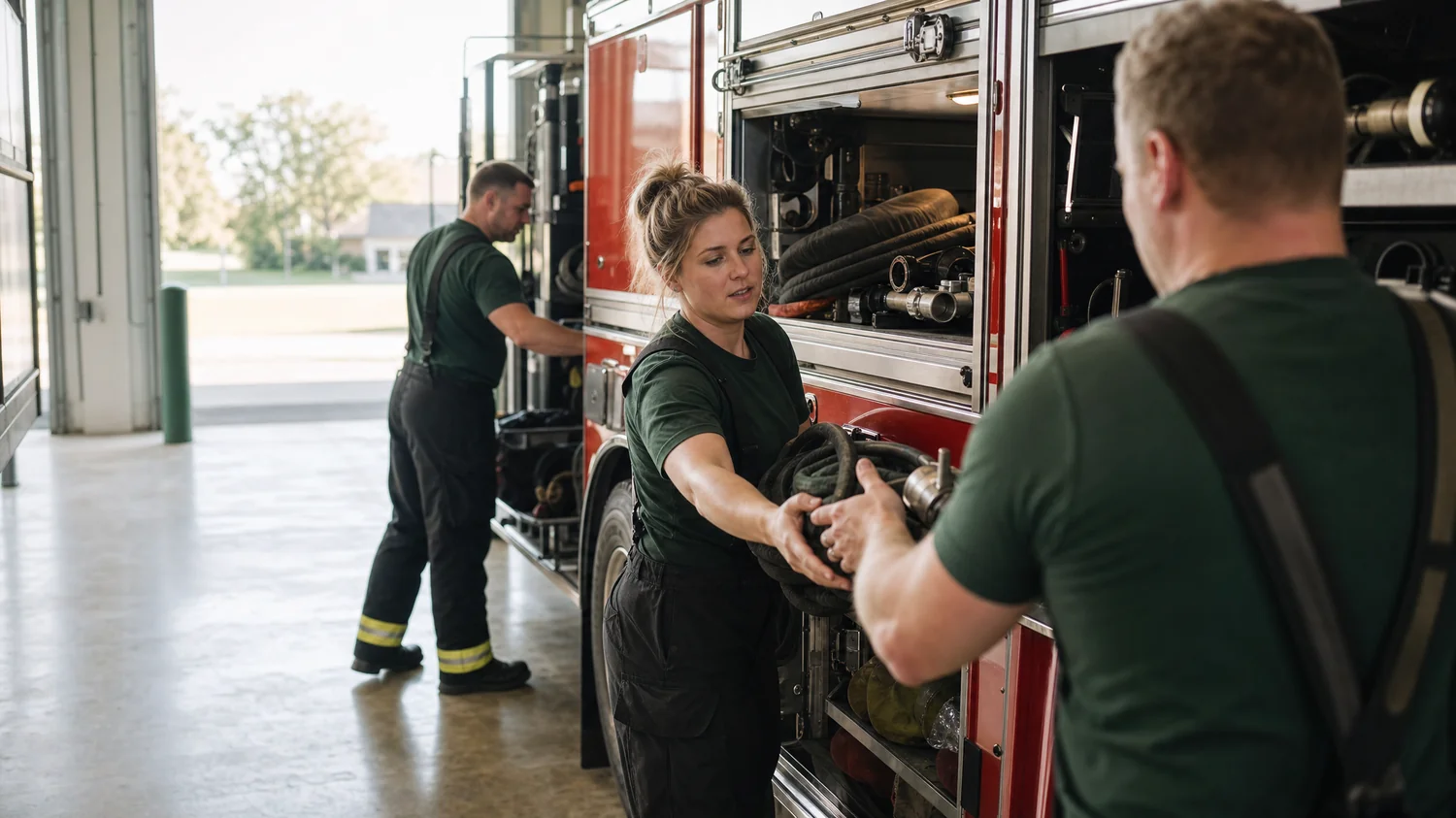
First responders do not only communicate with the public. They live and work in teams where personality differences create daily friction. A 24-hour shift in a fire station with diverse personality types requires constant communication navigation.
The Thinker lieutenant who sends detailed memos frustrates the Rebel firefighter who needs brief, energetic communication. The Harmonizer paramedic who tries to check in emotionally with the Promoter captain gets brushed off. The Imaginer who needs quiet processing time gets overwhelmed by the station’s constant activity.
PCM® team training for first responder units addresses both public communication and internal dynamics. When the team communicates effectively internally, they perform better on calls because interpersonal friction is not draining their cognitive resources.
Related: team communication workshop.
Why NASA’s Communication Framework Matters for First Responders
NASA selected PCM® for astronaut communication because astronauts face conditions similar to first responders: high stress, team confinement, critical decision-making, and zero margin for communication failure. The framework was validated in an environment where miscommunication could mean mission failure or loss of life.
First responders operate in the same stakes environment. The communication skills that keep astronauts functioning in space are directly applicable to the communication challenges first responders face daily: crisis de-escalation, team coordination, and community interaction.
Related: Process Communication Model®.
Frequently Asked Questions
How does first responder PCM® training differ from standard communication training?
Standard training provides scripts and procedures. PCM® training teaches the ability to read personality types in real time and adapt communication accordingly. Scenarios are built around first responder situations: crisis calls, witness interviews, patient interaction, and internal team dynamics. The skills are practiced, not just presented.
Can an entire department be trained in PCM®?
Yes. Department-wide PCM® training creates a shared communication framework that improves both internal team dynamics and public interaction. Many departments start with leadership training, then extend to the full team. Contact us for department-specific training formats and pricing.
How long does the training take?
First responder PCM® workshops typically run one to two days. Each participant completes a personality assessment beforehand. The workshop includes type-specific de-escalation practice, internal communication exercises, and scenario drills relevant to the specific first responder discipline (law enforcement, fire, EMS).
Is there evidence that personality-based communication improves first responder outcomes?
PCM®’s validation by NASA provides the strongest evidence base for high-stakes communication improvement. Additionally, departments that have implemented PCM® training report reduced community complaints, improved internal morale, and better crisis resolution outcomes. The clinical research base supporting PCM® spans over 40 years.
Real De-escalation Training.
PCM®-based communication for law enforcement, EMS, and fire personnel. NASA-validated. Field-tested with Wichita PD and EMS.