Reaching the Unreachable Student: Communication Strategies That Actually Connect
Apr 16, 2026
Some students light up in discussion. Others shut down. Some need structure. Others need play. The difference is not ability or motivation. It is personality-based communication style. PCM® helps teachers identify each student type and adapt their approach so every student feels reached. School and district programs available, with PD credit options.

The PCM® communication workshop helps teachers identify each student's personality type and adapt their delivery so every student feels reached, without a new curriculum or more prep.
Every participating teacher completes an individual PCM® assessment, then spends the session learning their own teaching style, the six student types in every classroom, and how to shift their communication channel in real time to reach the students who currently check out.
Programs are built to fit your calendar and professional development requirements, delivered in-person, for individual teachers, whole schools, or entire districts, with PD credit documentation available.

Booking for a group? Request a custom school workshop on a schedule that fits you.
We begin with a consultation to discuss your school's goals, current challenges, and professional development schedule. From there we build a workshop proposal with timeline, format, and pricing. Most schools are scheduled within four to six weeks.
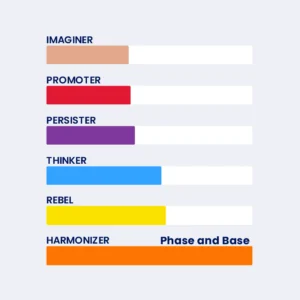
Every participating teacher completes the PCM® personality assessment online (~30-45 min) before the session. It reveals each teacher's base type, phase type, and stress patterns, so everyone arrives already knowing their own profile and the day can focus on practice.
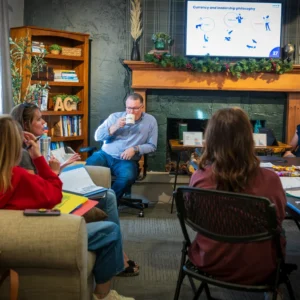
On the day, teachers learn their own teaching style, the six student types in every classroom, and how to shift their communication channel in real time. Delivered in-person with breakout rooms, using real classroom scenarios, not pre-recorded video.

Teachers leave with their PCM® profiles and a communication reference guide, and we provide documentation that meets PD credit requirements for most districts and states. We work with your PD coordinator to ensure compliance.
Every teacher who attends receives their comprehensive PCM® Profile. It is a research-based tool that identifies each person's unique personality structure, offering insight into how they perceive the classroom, engage with students, and respond under stress.
The workshop walks through decoding both your own communication style and the six student types in front of you, and teaches you how to reach each one using PCM®.
Example of a PCM® Personality Structure
You plan a lesson. You deliver it well. Half the class is engaged. The other half checks out, acts out, or stares blankly. The lesson did not fail. The communication channel did.
Every student has a dominant personality type that determines how they take in information, what motivates them, and what shuts them down. The students who engage easily are the ones whose type matches your natural teaching style. The ones who disengage need a different communication channel, not a different lesson.
PCM® gives you the framework to identify what each student needs and shift your approach in real time. Not a new curriculum. Not more work. A different lens on the students already in front of you.
The workshop builds six practical skills you can put to work in every class period, starting the day after training.
Read each student's personality type from observable classroom behavior and language patterns.
Shift your communication channel mid-lesson to match the student in front of you.
Defuse friction through communication style-matching instead of escalating consequences.
Meet the psychological needs that drive student engagement and motivation.
Apply PCM® to parent-teacher communication so conferences connect instead of creating defensiveness.
Identify the psychological need driving a behavior, so you respond to the cause rather than the symptom.
These are not abstract ideas. Every skill is practiced during the workshop with real classroom scenarios, so you leave knowing how to use them.
Every classroom contains all six personality types. When a student's communication need goes unmet, they show it the same way every time: the blank stare, the disruption, the half-finished worksheet that is easy to read as defiance or laziness. Recognize the type and you can answer the need underneath the behavior.
Goes withdrawn or clingy and makes careless mistakes when they feel unseen. The work suffers, but the real issue is that the relationship feels thin.
The real need: to feel valued as a person, not just assessed as a student; connect first and the careless slips and clinginess ease.
Argues with instructions and gets rigid about fairness and rules when the logic does not add up for them. It reads as defiance; it is really a search for order.
The fix: recognition for their thinking and a clear, logical structure; give the why and the framework and the arguing stops.
Disrupts, blames others, and flat-out refuses assignments when class feels like all rules and no spark. The clowning is a request, not a power play.
The unlock: playful contact without judgment and a way to engage on their own terms; lighten the channel and they show up.
Goes checked out, will not volunteer, and is slow to start anything when the room is loud and the pace is fast. The stillness looks like apathy but is overload.
The on-ramp: brief, clear directives with time and space to process; lower the pressure and point the way, and they begin.
Corrects other students and turns preachy about what is fair when they feel unheard. The policing is a bid to matter, aimed in the wrong direction.
The respect: to know their opinions matter and are heard; give their convictions a place and the policing softens.
Takes physical risks, pushes every boundary, and manufactures drama when the day is short on stimulation. The boundary-testing is a hunt for action.
The channel: action and challenge aimed somewhere productive; give them a real target and the limit-pushing becomes drive.
Your teachers already care about reaching every student. Give them the communication framework to do it. Contact us to build a training program for your school or district.
Each personality type thrives in a different environment. Understanding this helps you design instruction that reaches more students more often, without rebuilding your whole classroom.
Thrives in small groups with personal connection and collaborative work where they feel known.
Thrives in organized, quiet environments with clear expectations and a logical progression to follow.
Thrives with color, movement, variety, and real opportunities for creative expression.
Thrives with quiet reflection time, independent work, and space to process internally before sharing.
Thrives with purposeful work connected to values and chances to contribute their opinions.
Thrives with physical movement, friendly competition, and hands-on challenges to win.
Programs are designed to fit your calendar and professional development requirements. All formats include individual PCM® assessments for every participant.
| Individual PD Workshop | School-Wide Training | District Program | |
|---|---|---|---|
| Audience | Individual teachers | All faculty + staff | Multiple schools |
| Format | In-person | On-site at your school | On-site |
| Duration | Half-day to 1 day | 1–2 days | Multi-session over a semester |
| Focus | Personal teaching style + student type ID | Whole-school communication culture | District-wide rollout, train-the-trainer option |
| Best For | Teachers seeking PD credit | Schools wanting a consistent approach | Districts investing in systemic change |
Classroom management training focuses on systems, routines, and consequences. This workshop focuses on communication. When you match your delivery to a student's type, many management issues resolve on their own because the underlying need is finally met. PCM® does not replace your management systems; it reduces how often you reach for them.
It is not a new curriculum and it is not more work, either. Differentiated instruction changes what you teach; PCM® changes the channel you teach it through. You leave with a different lens on the students already in front of you, not another binder to implement.
Have a question we haven't answered? Matt or Sarah will reply personally within one business day.
Contact Us arrow_forward