Communication Breakdown at Work: What to Do When Your Team Stops Hearing Each Other
Jul 9, 2026
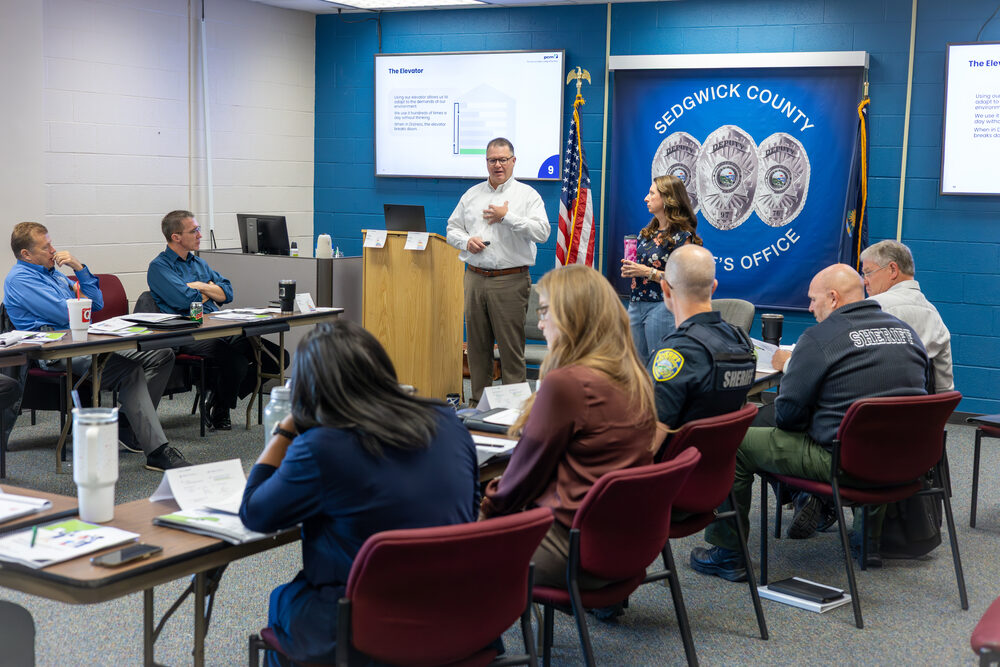
Your team has the skills. The problem is they cannot communicate across styles. Each participant takes the PCM® assessment before the workshop and learns to identify and adapt to colleagues' styles in real time. Half-day and full-day workshops available in Wichita for distributed teams.

You hired talented people. They know their roles. They care about the work. And yet your meetings run long, emails get misread, and two people walk out of the same conversation with completely different understandings of what was agreed.
The problem is not talent and it is not attitude. It is communication style mismatch. Your analyst who needs data and structure is paired with a strategist who communicates in big-picture vision. Your quiet thinker who processes internally is in meetings dominated by an energetic presenter who thinks out loud. Neither person is wrong. They are just speaking different communication languages.
Team communication training that addresses surface-level skills like active listening and email etiquette misses the structural problem underneath. The Process Communication Model® goes deeper, identifying six distinct personality types and giving your team specific strategies for communicating with each one.
Booking for a group? Request a custom team workshop on a schedule that fits you.
 Mariah Frazier DDS, PA
Wichita, KS
Mariah Frazier DDS, PA
Wichita, KS
"We highly recommend Affinity Consultants to help any team navigate stressful situations in the workplace and promote healthy communication. Our small healthcare office was desiring leadership training for our administrative team and we gained useful tools to improve our leadership. This was a win! Matt and Sarah are so fun and relatable that our team looked forward to each session. They gave us strategies that are helping us feel better equipped to handle challenges now. We have a wealth of resources that are accessible when future issues arise. Thank you Affinity Consultants!!"
A free 30-minute call where we learn about your team, your challenges, and your goals for the training.

Every participant completes the PCM® assessment before the workshop, giving us a communication profile for each person.
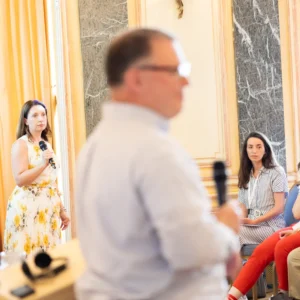
Half-day or full-day sessions built around real dynamics and scenarios from your specific team.
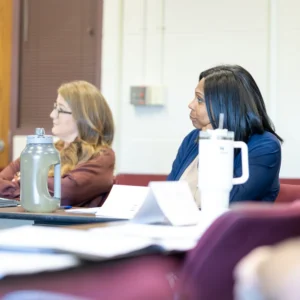
Team communication map, individual reference guides, and optional follow-up coaching sessions.
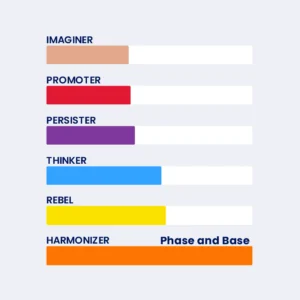
Every participant receives their own comprehensive PCM® Profile. It is a research-based tool that identifies each person's unique personality structure, offering insight into how they perceive the world, engage with colleagues, and react under stress.
The workshop decodes each person's communication style and gives the whole team a shared vocabulary for reaching one another, without judgment or blame.
Example of a PCM® Personality Structure
Every team has a version of pursuit and withdrawal playing out in meetings, emails, and hallway conversations. One person pushes harder to be understood while the other pulls away. These are not personality flaws. They are predictable stress responses tied to communication type.
One person sends the long, detailed email; another reads three lines and moves on. One thinks out loud in the meeting; another needs quiet to process and never gets the chance. Each is doing exactly what their type needs, and each experiences the other as the problem.
Team communication training that only addresses surface skills leaves this structural mismatch untouched. It is why the same friction resurfaces on a new project with a new topic but the same dynamic underneath.
When your team learns to recognize these patterns in themselves and each other, the dynamic shifts from frustration to understanding. That is the foundation of effective team communication training.
Every participant leaves with practical skills and shared vocabulary they can apply immediately. This is not theory. It is built for the real dynamics on your team.
Your team gets a common language for talking about communication styles without judgment or blame.
Learn to read a colleague's communication type within minutes of interaction.
Practice shifting your communication approach mid-conversation when you notice a style mismatch.
Understand why certain meetings feel productive and others feel painful, then redesign accordingly.
Teams that communicate across personality types collaborate faster on projects that span departments.
Learn which activities energize each type and which drain them, so you can structure work that sustains everyone.
Teams tell us the shared vocabulary alone is worth the workshop. When everyone can name what is happening in a difficult conversation, the conversation changes.
What you see on the surface: the long email, the public correction, the sudden silence is only the visible layer. Underneath, each personality type has a predictable distress sequence tied to what it needs and is not getting.
Under stress, becomes over-detailed and controlling, sending long emails nobody reads and correcting colleagues publicly to keep things precise.
The over-correction: recognition of their thinking and a clear time structure; give both and the need to control every detail eases.
Under stress, makes mistakes and over-adapts, agreeing to unrealistic deadlines and avoiding conflict until quiet resentment finally builds up.
The buildup: to feel valued as a person, not just a role; value them and the resentment never gets the chance to boil over.
Under stress, becomes preachy and rigid, focusing on what colleagues are doing wrong and pushing their way as the only right way.
The standoff: respect for their opinions and values; grant it and the my-way-or-else rigidity starts to loosen.
Under stress, manipulates and manufactures unnecessary urgency, turning every project into a competition that someone has to win.
The pressure valve: excitement, challenge, and direct engagement; hand them a real one and the invented urgency drops away.
Under stress, blames others and turns spiteful, disengaging with sarcasm and making negative comments about the team under their breath.
The disengage: playful contact and creative outlets; restore them and the cynicism turns back into energy.
Under stress, goes passive and stops contributing, missing deadlines without warning and seeming checked out in meetings.
The drop-off: solitude and clear, step-by-step directives; provide both and the silent missed deadlines stop.

Tell us about your team and what you are trying to solve. We will design the program around your people to fit your goals and your schedule.
Most teams start with a half-day intensive and add sessions based on initial results. We can help you build a phased plan.
| Half-Day Intensive | Full-Day Deep Dive | Multi-Session Program | |
|---|---|---|---|
| Duration | 4 hours | 7–8 hours | 4 × 2-hour sessions |
| Group Size | 4–15 | 4–20 | Any size |
| Format | In-person | In-person | In-person |
| PCM® Assessment | Included | Included | Included |
| Practice Scenarios | 2–3 exercises | 5+ exercises | Ongoing application |
| Follow-Up | Reference guide | Guide + team map | Guide + map + coaching |
| Best For | Introduction to PCM® | Deep skill building | Sustained behavior change |
If the word "workshop" makes you picture trust falls and icebreakers, let us be clear about the difference. Team-building creates temporary bonding moments. Team communication training gives your people a permanent framework for understanding and adapting to each other's communication styles.
This is not theory, and it is not a one-day morale boost. Every participant completes the PCM® assessment beforehand, then spends the session practicing on the real dynamics and scenarios from your specific team, so the skills transfer straight back to the workweek.
Have a question we haven't answered? Matt or Sarah will reply personally within one business day.
Contact Us arrow_forward