Communication Breakdown at Work: What to Do When Your Team Stops Hearing Each Other
Jul 9, 2026
Your team has the talent. The problem is how they communicate. Affinity Consultants delivers leadership communication training built on the Process Communication Model, a research-backed framework originally developed for NASA that teaches leaders and teams how to communicate across six distinct personality types. Organizations that implement PCM®-based training see measurable improvement in collaboration, reduced conflict in meetings, and stronger retention of high performers. Available in-person in Wichita, Kansas.

Backed by decades of research and delivered by certified professionals who have trained teams across industries.
The Process Communication Model® was originally developed for NASA to screen and train astronauts, people whose ability to communicate under pressure could mean the difference between mission success and catastrophe. It identifies six distinct personality types, each with its own communication channel, motivational needs, and predictable distress patterns.
These credentials matter because leadership communication training only works when the framework behind it has been validated in high-stakes environments. That is what you get with Affinity: a research-backed model, delivered by certified PCM® Therapists & Trainers.
Booking for a group? Request a custom leadership workshop on a schedule that fits you.
 Mariah Frazier DDS, PA
Wichita, KS
Mariah Frazier DDS, PA
Wichita, KS
"We highly recommend Affinity Consultants to help any team navigate stressful situations in the workplace and promote healthy communication. Our small healthcare office was desiring leadership training for our administrative team and we gained useful tools to improve our leadership. This was a win! Matt and Sarah are so fun and relatable that our team looked forward to each session. They gave us strategies that are helping us feel better equipped to handle challenges now. We have a wealth of resources that are accessible when future issues arise. Thank you Affinity Consultants!!"
We designed the process to minimize disruption and maximize application. Every step builds on the one before it, so your team leaves having already practiced the skills. Most teams schedule the discovery call and assessments in the same week.
A free 30-minute conversation where we learn about your team, your challenges, and what success looks like for you.
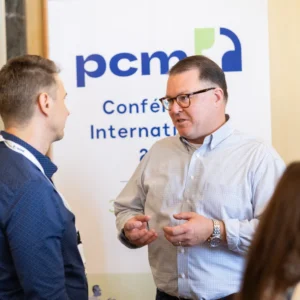
Every team member completes the PCM® assessment before the workshop, giving us a detailed communication profile for each person.
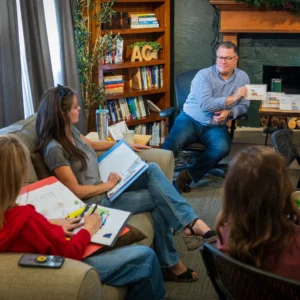
In-person sessions built around real scenarios from your workplace, not generic case studies.
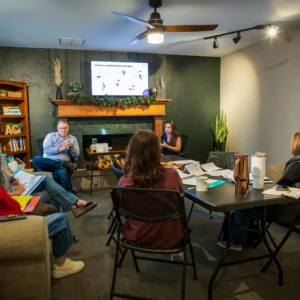
Participants practice adapting their communication using actual situations they face every day, with live coaching.

Reference materials, a team communication map, and optional one-on-one coaching to reinforce the learning.
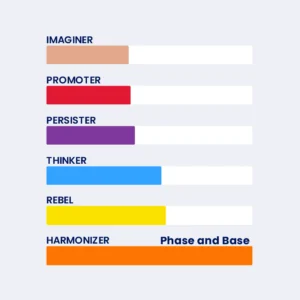
Every participant receives their comprehensive PCM® Profile. It is a research-based tool that identifies each person's unique personality structure, offering insight into how they perceive the world, engage with others, and respond to stress.
Paired with a team communication map, it becomes a shared reference your leaders keep using long after the workshop day, guiding future one-on-ones, meetings, and hiring decisions.
Example of a PCM® Personality Structure

When a team underperforms, the typical response is to treat the symptoms: team-building exercises, motivational speakers, reorganized reporting lines. None of it works, because none of it addresses the root cause.
People on your team are speaking different communication languages and nobody realizes it. A direct manager gives blunt, efficient feedback to a detail-oriented employee. The employee does not hear efficiency. They hear "your work is not good enough." A creative team member pitches an idea with energy. Their analytical colleague does not hear the idea. They hear noise.
These are not personality conflicts. They are communication mismatches. And leadership communication training that does not address them at the structural level keeps producing the same frustrating results.
The Process Communication Model® identifies six distinct personality types, each with its own preferred communication channel, motivational needs, and predictable distress patterns. When leaders learn to identify and adapt to these types, the shift in team dynamics is immediate and measurable.
This is not a lecture about communication styles. Every participant leaves with specific, actionable skills they can apply in their next meeting, their next one-on-one, and their next difficult conversation.
Discover how your default communication style creates friction with specific personality types on your team.
Learn to identify a colleague's communication type within minutes of conversation, not days of observation.
Practice shifting your communication channel to match the person in front of you, especially when stakes and emotions run high.
Spot the early warning signs of communication breakdown before they become full-blown team conflicts.
Leave with a documented reference for your team's communication profile that guides future interactions and hiring decisions.
These skills compound over time. Teams that complete the training report that the shared vocabulary alone changes how they approach collaboration.
Every person on your team has a dominant communication personality type. When their needs go unmet, they show predictable distress patterns: the micromanaging, the silence, the meeting that derails that most managers mistake for attitude or lack of motivation. Learn to read the signal and you can respond to the need underneath it.
When their need for recognition of work and clear structure goes unmet, they tighten their grip: rigid, micromanaging, and critical of every detail that is not done their way.
The clamp: the control is a bid for the recognition and order they are not getting; supply both and the grip loosens.
Over-adapts and says yes to everything, absorbing more and more until there is nothing left. Then they quietly check out, often without ever telling you something was wrong.
The slow fade: the yes was never agreement, it was a need to be valued as a person; miss it long enough and they quiet-quit.
Turns preachy and self-righteous, launching crusades and re-litigating settled decisions when they feel their convictions are being steamrolled.
The soapbox: the lecture is a demand for respect for what they believe; acknowledge the conviction and the meeting starts moving again.
Manipulates situations, takes unnecessary risks, and stirs up conflict, manufacturing excitement when the work has stopped providing any.
The spark hunt: the drama is a search for challenge and stimulation; hand them a real one and the games stop.
Blames others, gets spiteful, and disengages, trading effort for sarcasm when the work starts to feel joyless and boxed in.
The shrug: the blame masks a need for playful contact and creative room; restore both and they re-engage fast.
Becomes passive, stops contributing in meetings, and starts missing deadlines, retreating into the background when the noise gets to be too much.
The quiet exit: the silence is a need for solitude and clear, direct instructions; give the space and the directive and they deliver.
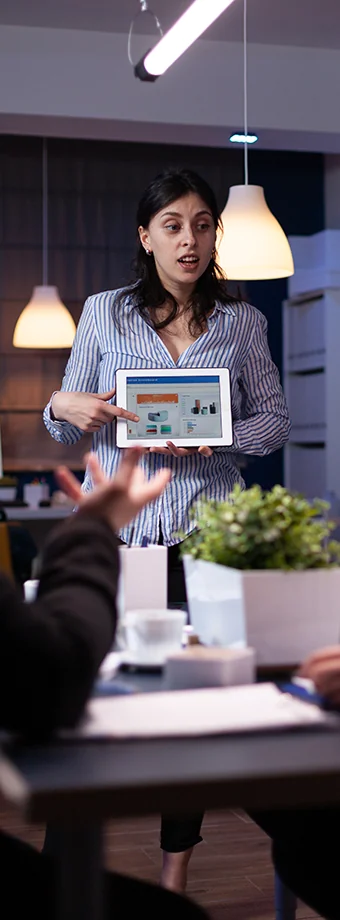
Tell us about your team and what you are trying to solve. We will design the program around you to fit your goals, your schedule, and your budget.

Communication training for employees often ignores the environment where communication happens. But the physical and digital workspace shapes how effectively each personality type can engage.
Open floor plans energize Rebels and Promoters but exhaust Imaginers and Thinkers. Back-to-back meetings drain Harmonizers who need processing time but suit Persisters who thrive on structured agendas. Slack channels with constant notifications overwhelm detail-oriented types while keeping spontaneous types engaged.
Even recognition carries hidden bias. Public shout-outs motivate Rebels and Harmonizers but embarrass Imaginers. Written performance reviews satisfy Thinkers but feel impersonal to Promoters who need face-to-face engagement.
Our training includes an environment audit that helps your team design workspace norms that accommodate all six types.
Every format includes PCM® assessments for each participant and follow-up resources. Not sure which one fits? The discovery call is free, and we will help you choose.
| Executive Coaching | Team Workshop | Department Training | |
|---|---|---|---|
| Group Size | 1–3 leaders | 4–15 participants | 15–50 participants |
| Duration | 3 × 90-min sessions | Half or full day | Full day + follow-up |
| Format | In-person | In-person | In-person |
| PCM® Assessment | Included | Included | Included |
| Follow-Up Coaching | Included | Optional add-on | Optional add-on |
| Best For | Senior leaders | Intact teams | Cross-functional groups |
If "communication training" makes you picture a slide deck of personality quadrants and a day your team will forget by Monday, this is different. This is not a lecture about communication styles. Every participant leaves with specific, actionable skills they can apply in their next meeting, their next one-on-one, and their next difficult conversation.
Every workshop is built around real scenarios from your workplace, not generic case studies. Team-building exercises, motivational speakers, and reorganized reporting lines treat the symptoms. This addresses the root cause: how your people actually talk to each other.
Have a question we haven't answered? Matt or Sarah will reply personally within one business day.
Contact Us arrow_forward