
How to Break the Wimpy Parenting Cycle: Regulate Yourself, Not Just Your Kid
Sep 26, 2026
You have tried everything. Calm conversations. Raised voices. Taking things away. Giving space. Nothing works. The problem is not your child. It is not your parenting. It is a communication mismatch that neither of you can see. The parent communication workshop from Affinity Consultants uses the Process Communication Model® to show you exactly how your child needs to be communicated with based on their personality type.

Most parenting advice assumes all kids respond to the same approach. Speak calmly. Set boundaries. Be consistent. And when it does not work, it says try harder. But trying harder at the wrong approach just creates more frustration for everyone.
The problem is communication channel matching. Your child who needs playful engagement is getting serious talks. Your teenager who needs logic and structure is getting emotional appeals. The words are fine. The channel is wrong.
The Process Communication Model® identifies the specific channel your child needs, not based on their age, not based on their behavior, but based on their personality type. When you shift to the right channel, the response is often immediate. The child who would not listen suddenly engages. The teenager who shut down starts talking.
This is not a parenting philosophy. It is a communication framework backed by decades of research that gives you the specific words, tone, and approach your child is wired to receive.


Booking for a group? Request a custom parenting workshop on a schedule that fits you.
"PCM® has helped us to understand the difference in personalities. But our superpowers within our own personalities help to fill in the gaps for each other and balance the relationship. We have had to learn and put into action steps to avoid conflict that we can easily slip into simply by miscommunicating. It has helped us to understand what to look for, and what it means for the other person to be in distress."
You will leave with tools you can use that evening. This works for toddlers, teens, and everyone in between, and parents of teenagers often see the most dramatic results because the mismatch has had years to build.
Parents take the PCM® assessment before the workshop, so we can build the session around your specific family dynamics.

Learn the PCM® framework and how it applies specifically to parenting. Interactive, not lecture-based.
Work through real conversations from your family life: homework battles, phone arguments, the "you never listen" cycle.

Leave with your personal PCM® profile, a reference guide, and type-matched strategies for your specific child.

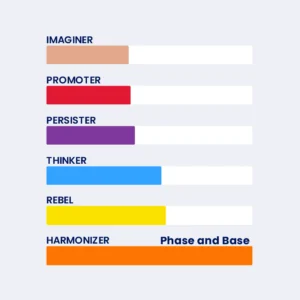
Every parent who attends receives their own comprehensive PCM® Profile. It is a research-based tool that maps your unique personality structure, showing how you perceive the world, how you engage with your child, and how you respond under stress.
From there, the workshop translates that profile into practical parenting: exactly how each of your children needs to be heard, and the specific words, tone, and setting that reach them.
Example of a PCM® Personality Structure

You have run the whole playbook. Calm talks. Firm boundaries. Consequences. Extra patience. When one approach stops working, the advice is always the same: be more consistent, try harder. But trying harder at an approach your child was never wired to receive only turns the frustration up on both sides.
The real issue is channel matching. A child who needs playful engagement is getting serious sit-downs. A teenager who needs logic and structure is getting emotional appeals. The words are usually fine. It is the channel that keeps missing.
The Process Communication Model® pinpoints the exact channel your child is built to hear, not from their age or their behavior, but from their personality type. Shift to the right channel and the change is often immediate: the kid who would not listen leans in, the teenager who shut down starts talking.
This is not another parenting philosophy. It is a communication framework backed by decades of research that hands you the specific words, tone, and approach your child is already wired to receive.
This workshop is built for parents who are done with generic advice and ready for specific tools that work with their specific child. Here is what you will walk out with:
Learn which of the six PCM® types drives your child's behavior and communication needs.
Discover how your own communication defaults create friction with your child's type, often without either of you noticing.
Walk away with exact language and tone strategies matched to your child's personality type.
Learn what motivates your child at the deepest level so you can fill their tank instead of draining it.
Role-play actual conversations from your family life with a certified trainer guiding you in real time.
Leave with a documented plan for how each family member communicates best.
Parents consistently tell us the biggest shift is understanding their own type. When you see your own patterns clearly, you stop blaming your child for not responding to an approach that was never going to work for them.
Every child has a dominant personality type that shapes how they need to be communicated with. When that need goes unmet, they show predictable distress patterns: the eye-roll, the slammed door, the homework that never gets done that parents often misread as defiance, laziness, or emotional instability.
Becomes clingy, makes careless mistakes, and withdraws emotionally when they feel disconnected from you. The behavior looks needy or scattered; it is really a bid for closeness.
The real ask: warmth and emotional connection before anything else; reach the heart first and the clinginess and careless slips settle down.
Becomes rigid, argues endlessly about fairness, and melts down over a changed schedule or a broken plan. What reads as stubbornness is a need for order.
The reset: structure, logic, and recognition of their competence; give the plan and the reason and the meltdown loses its fuel.
Acts out, blames siblings, and flat-out refuses homework when everything feels like a chore. The defiance is boredom and pressure with nowhere to go.
The icebreaker: playful contact, humor, and a little creative freedom; lighten the channel and the resistance turns into engagement.
Becomes passive, will not make decisions, and seems completely checked out, retreating somewhere you cannot follow when the noise and pressure pile up.
The way back: solitude, low pressure, and clear step-by-step direction; ease off and point the way, and they quietly re-engage.
Lectures you about what is right, becomes judgmental, and digs in hard on a position when they feel dismissed. The righteousness is a need to be taken seriously.
The handshake: recognition of their values and opinions; honor the conviction and the lecture turns back into a conversation.
Takes risks, pushes every boundary, and manufactures drama for the thrill of it when life gets dull. The boundary-testing is a hunt for stimulation.
The redirect: action, challenge, and direct engagement; give them a real outlet and the limit-pushing loses its point.

You are already a good parent. This just gives you better tools. Book a workshop and learn exactly how your child needs to hear you.
Parents focus on what they say but rarely think about where they say it. The environment you choose for a conversation shapes whether your child can actually hear you. The right setting depends on your child's type as much as the right words do.
A family game night or a cozy one-on-one energizes them. Cold, businesslike settings make them feel disconnected before you say a word.
The kitchen table works: an orderly, face-to-face conversation where the plan is clear. Chaos and clutter shut their thinking down.
Sitting across from you feels like an interrogation. Go for a walk, keep it light and playful, and suddenly they are present.
Loud family game nights drain them. They open up in calm, private space with time to process before they answer.
They need real time without siblings competing for attention, a setting that signals you take them and their opinions seriously.
They connect through doing, not through long stationary talks. Give them movement and a challenge and the conversation opens up.
The parent communication workshop includes strategies for choosing the right setting for each conversation based on your child's type, so you stop accidentally sabotaging the talks that matter most.
We offer multiple formats to fit your schedule and your family situation.
| Individual Parent | Both Parents | Small Group | |
|---|---|---|---|
| Duration | 2–3 hours | 3–4 hours | Half day |
| Format | In-person | In-person | In-person |
| PCM® Assessment | 1 included | 2 included | Included per participant |
| Take-Home Guide | Included | Included | Included |
| Best For | Single parents or solo sessions | Co-parents, blended families | Friend groups, church groups |
Not sure which format is right for your family? Book a free discovery call and we will help you decide.
This is a communication skills workshop, not therapy and not another parenting class. We teach you a specific framework and hand you tools you can use immediately. Most parenting classes drill behavior-management techniques; this workshop teaches you how to communicate with your specific child based on their personality type, which is why the results come faster and last longer.
You do not have to be in crisis to benefit. Many parents come simply because they know communication with their child could be better and want to do something about it before small problems become big ones. If deeper family issues surface along the way, we are glad to point you toward the right resources.
Have a question we haven't answered? Matt or Sarah will reply personally within one business day.
Contact Us arrow_forward