

Why Do I Keep Choosing the Wrong Partner? How Attachment Styles Shape Every Relationship
Episode 7: Behind the Therapy Door
This article draws on a conversation between therapists Sarah Thome and Matt Gallagher. Listen to the full episode for the stories behind the takeaways.
You swore you would not date another person like your ex. Then you did. If your relationship history feels like a pattern you cannot break, your attachment style may be running the show from backstage. On Episode 7 of Behind the Therapy Door, Sarah Thome and Matt Gallagher unpack the four attachment styles in relationships, how they form in childhood, and how they silently shape every adult relationship you enter.

Related: About Sarah and Matt.
Related: PCM® vs Gottman: comparing relationship frameworks.
What Are the Four Attachment Styles in Relationships?
Attachment theory identifies four primary styles: secure, anxious, avoidant, and disorganized. Secure attachment means you are comfortable with closeness and can tolerate separation without spiraling. Anxious attachment means you crave connection but worry constantly about abandonment. Avoidant attachment means you value independence so much that vulnerability feels threatening. Disorganized attachment means your caregivers were both the source of comfort and the source of fear, leaving you with no consistent strategy for connection.
Research shows that partners tend to be equidistant from secure attachment. Sarah presented on this at Bordeaux, and it generated significant discussion. The anxious partner and the avoidant partner are not opposites. They are mirror images, equally far from the center.
Related: Communication patterns in relationships.
How the Process Communication Model® Maps to Attachment Tendencies
This is where PCM® adds a layer most attachment discussions miss. Sarah and Matt explain that Harmonizer, Persister, and Thinker personality types tend toward anxious attachment in distress. They people-please, fear mistakes, and try to control outcomes to prevent loss. Rebel and Promoter types tend toward avoidant attachment, where vulnerability feels like weakness and bonding feels like a trap. Imaginer types crave solitude and autonomy, which can look avoidant but comes from a different internal need.
When you go deeper into distress, even those types can flip into more avoidant behavior.
Sarah Thome, Behind the Therapy Door
Understanding both your attachment style and your personality type gives you a three-dimensional map of why you do what you do in relationships, not just a label.
Related: PCM® personality types.
Related: DISC vs MBTI vs PCM®: which framework goes deepest?.
Why Do Anxious and Avoidant Partners Keep Finding Each Other?
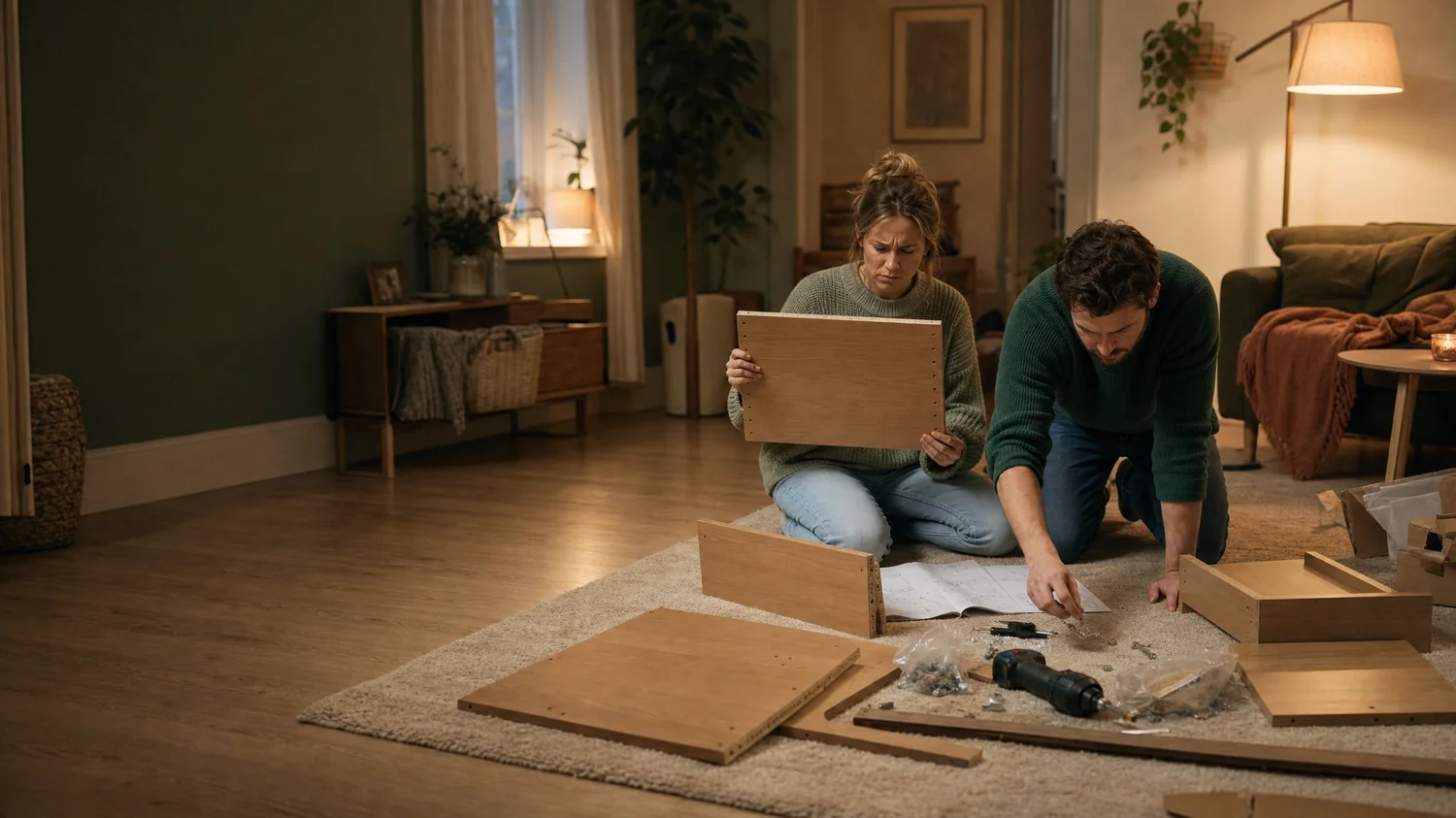
It feels like a cosmic joke, but there is a logic to it. The anxious partner’s pursuit triggers the avoidant partner’s retreat, which triggers more pursuit, which triggers more retreat. Both are trying to regulate their nervous systems, but their strategies are incompatible. The anxious partner seeks closeness for safety. The avoidant partner seeks distance for safety. Neither is wrong. They are just pulling in opposite directions.
Sarah connects this to PCM® distress: “When you go deeper into distress, even those types can flip into more avoidant behavior.” The deeper the stress, the less flexible your coping becomes.
“We are not wired to be alone; we are wired to be left alone sometimes.”
— Matt Gallagher
Related: Understanding distress sequences.
Can You Change Your Attachment Style?
- Yes, but it takes intentional work. Attachment styles are not fixed for life. Through therapy, self-awareness, and healthy relationship experiences, you can move toward more secure attachment.
- Start by naming your pattern. Do you pursue when stressed? Pull away? Alternate between both? Recognizing your pattern is the first step to changing it.
- Find a partner willing to grow with you. Secure attachment does not require a perfect partner. It requires two people willing to understand each other’s wiring and meet in the middle.
Related: Take the PCM® assessment.
Frequently Asked Questions
What is anxious attachment in adults?
Anxious attachment in adults shows up as a persistent fear of abandonment, a need for frequent reassurance, difficulty trusting that your partner will stay, and a tendency to overanalyze interactions for signs of rejection. It often originates in childhood experiences where caregiving was inconsistent or conditional.
Can two anxiously attached people have a healthy relationship?
Yes, but it requires significant self-awareness from both partners. Without awareness, two anxious partners can spiral together, catastrophizing and feeding each other’s fears. With awareness and tools like PCM®, they can learn to ground each other instead of escalating together.
How does PCM® help with attachment issues?
PCM® adds a practical, behavioral layer to attachment theory. It shows you exactly how your personality type expresses attachment stress, what distress patterns look like in real time, and how to communicate in ways that meet your partner’s specific needs rather than defaulting to your own wiring.
Ready to Communicate Without the Same Old Fight?
Break the cycle of anxious-avoidant pursuit. Our couples communication workshop gives you and your partner tools to build more secure attachment together.